

In Short
- Plan for a scheduled training day. Queensland has a 4.5-hour minimum; Victoria requires at least 6 hours in a physical classroom. Check your exact course timetable.
- Assessment includes practical skills. You must demonstrate PPE fitting and complete the required knowledge, oral and written tasks.
- Approved online options vary by jurisdiction. Live delivery does not remove assessment or learner-location requirements.
- Course completion and card delivery are separate. Confirm acceptable evidence and site requirements before starting work.
Book your White Card with National White Card Courses
Ready to get started? Choose your state to find available classroom or online options, check the requirements and book your course with our team.
National Courses Pty Ltd · RTO 41072. WA courses are pending approval.
Need a hand choosing? Call 1300 988 181.
If you are planning to work in construction, it helps to know how much time to allow for training, assessment and receiving your card. These are separate stages, and the timing depends on your course and jurisdiction.
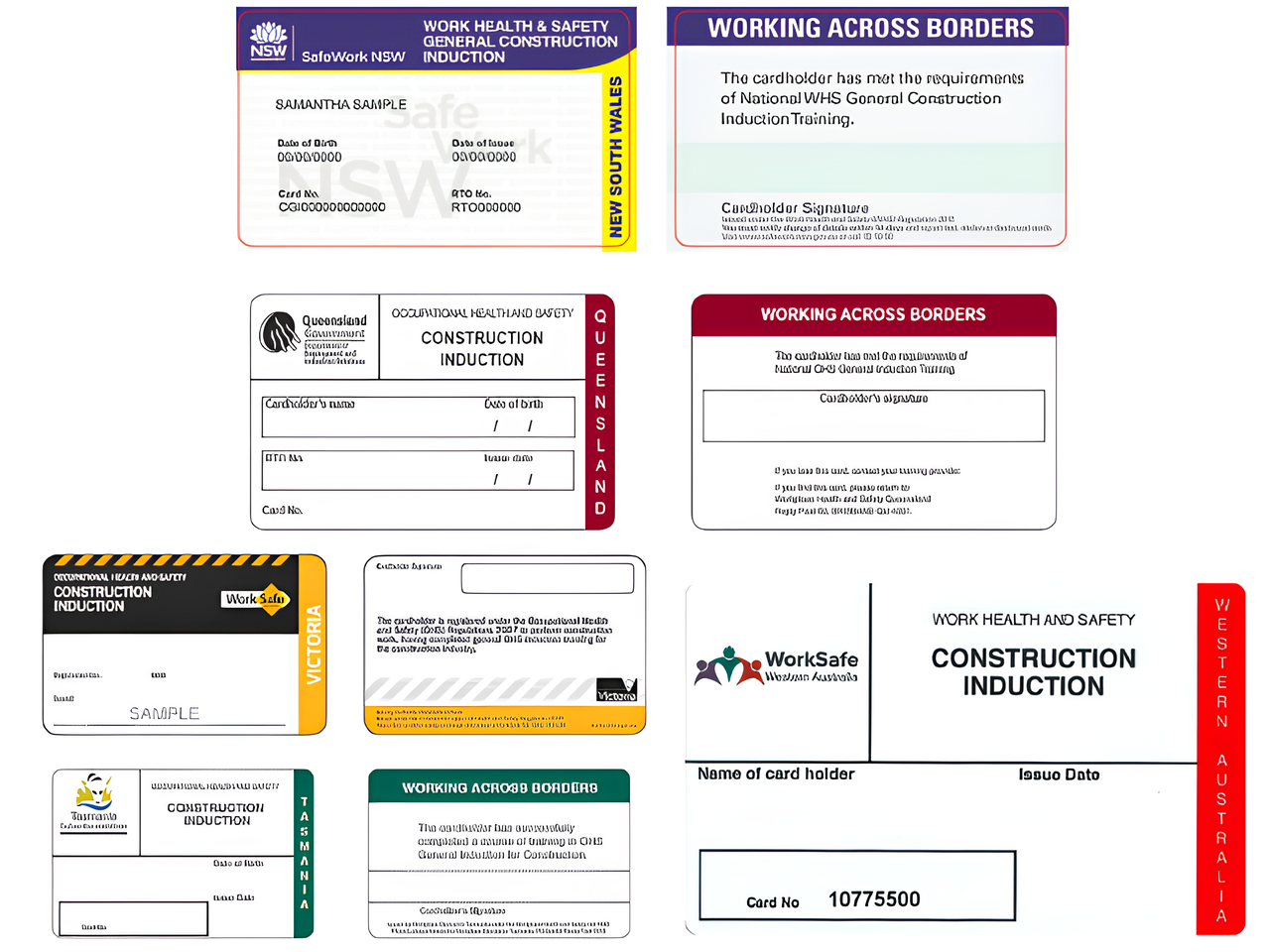
A White Card records general construction induction training. It is required for construction work and other covered access to operational construction zones, with separate site and task requirements.
Many courses fit into one day, but there is no single national duration. Queensland requires at least 4.5 hours and Victoria requires at least 6 hours in a physical classroom. Finishing the course does not automatically clear you for every worksite.
In this guide, we cover how long the White Card course takes, what you actually learn, who needs one, and how quickly you can start working once you’ve got it.
How Long is the White Card Course?
Plan for a scheduled training day, but check the exact start and finish times for your course. There is no single national duration: regulator minimums, approved delivery arrangements and learner assessment needs all matter.
Our classroom courses combine safety learning and assessment. These examples show why the course location matters:
- Queensland: The regulator requires a minimum of 4.5 hours. Our Queensland courses are scheduled for approximately 5 hours.
- Victoria: WorkSafe requires at least 6 hours in a physical classroom. Online delivery is not permitted for a Victorian card.
- Other jurisdictions: Confirm the full timetable with the approved RTO, including ID checks, breaks and assessment. Do not apply Queensland’s minimum to every state.
Approved live online training is available in some jurisdictions, including Queensland through specifically approved RTOs. The NT introduced approved connected real-time delivery from 1 July 2026. Check the course’s approval and learner-location rules before booking.
Online delivery does not remove mandatory assessment. The current CPCWHS1001 unit requires knowledge evidence, oral and written reporting, and practical performance observed by the assessor in person or by real-time audiovisual communication.
For a live online class, allow the full scheduled session and check your device, connection and required PPE beforehand. A short unattended quiz cannot replace observed practical assessment.
Course completion time and card delivery time are separate. Finishing training in a day does not mean every learner receives a physical card that day.
Completion depends on meeting all assessment requirements. If you need extra support or reassessment, your training may take longer than the scheduled session. Discuss this with us before booking.
Allow time for enrolment, identity checks and a USI unless an approved exemption applies. Preparing these in advance can help avoid delays.

What is Covered in the White Card Course?
The White Card course is designed to give workers a basic understanding of construction site safety and legal responsibilities. During the course, you’ll learn about:
Workplace Health and Safety Laws
Participants learn about Australia’s Work Health and Safety (WHS) legislation and the responsibilities workers have when operating on construction sites.
Hazard Identification
Construction sites can involve a wide range of hazards. The course teaches you how to identify potential risks such as:
- Falling objects
- Working at heights
- Electrical hazards
- Moving vehicles and machinery
- Hazardous materials
Risk Control Measures
Identifying a hazard is only half the job. The other half is knowing what to do about it. The course walks you through Australia’s hierarchy of controls, which is a practical framework used on construction sites to reduce or eliminate risk.
You’ll learn the difference between eliminating a hazard entirely, substituting it for something safer, and using administrative controls or PPE as a last line of defence. The course also covers safe work method statements (SWMS), which are written documents that outline how high-risk work should be carried out safely. Knowing how to read and follow a SWMS is a basic expectation on most Australian construction sites.
By the end of this section, you’ll understand that safety is about making smart decisions before the work even starts.
Personal Protective Equipment (PPE)
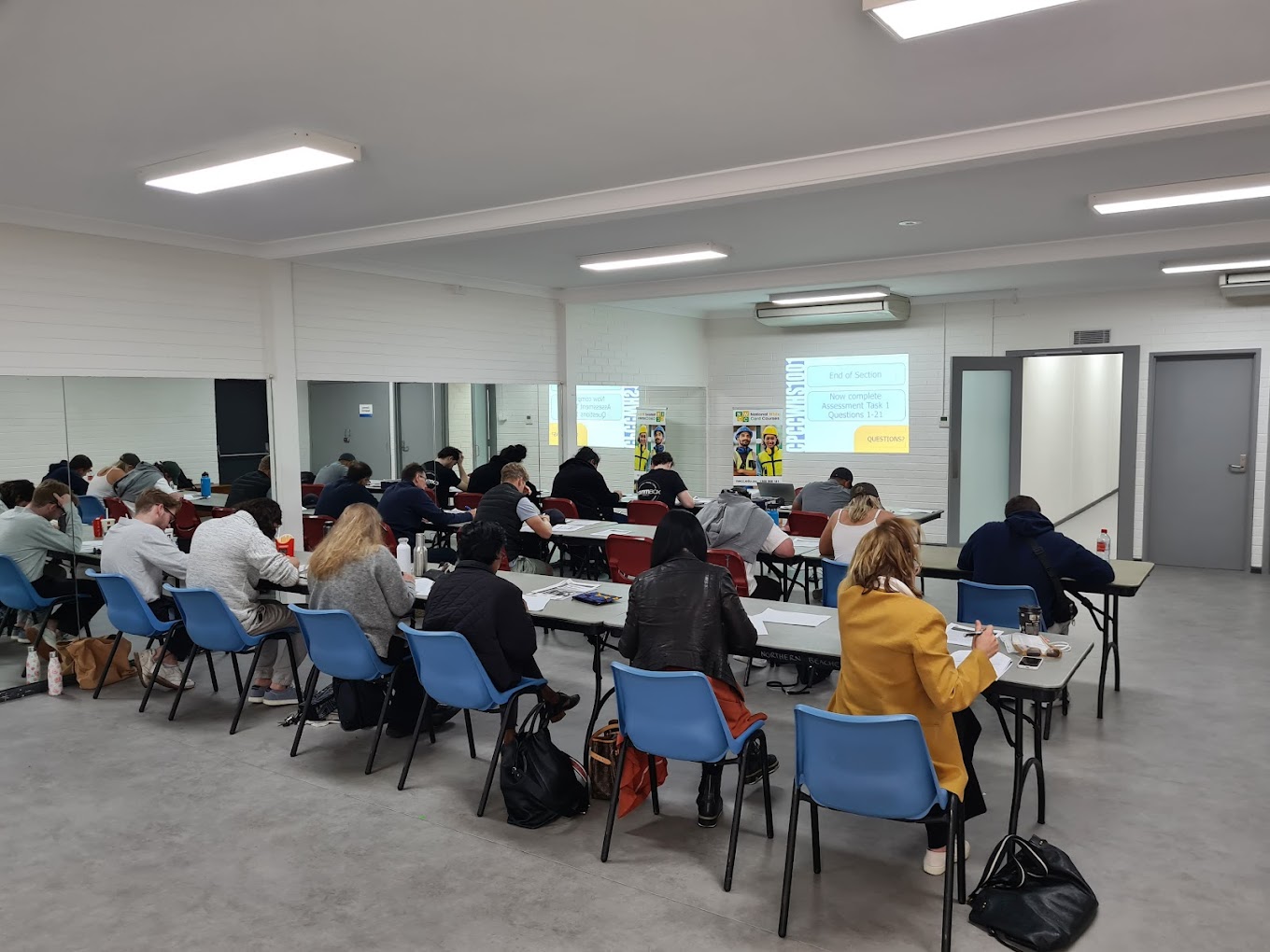
You must demonstrate correct selection and fitting of a hard hat, eye protection, hearing protection and high-visibility clothing. The course also discusses suitable workplace PPE, which can include safety boots:
- Hard hats
- Safety boots
- High-visibility clothing
- Eye and hearing protection
Emergency Procedures
When something goes wrong, you need to know exactly what to do. This section covers how to respond to common on-site emergencies, including fires, chemical spills, serious injuries and natural disasters.
You’ll learn how to raise the alarm, follow evacuation procedures, and locate emergency assembly points. The course also covers the basics of incident reporting. Who to notify, what information to record, and why getting it right matters legally and for the safety of everyone on site.
A big part of this section is understanding that staying calm and following the right steps can be the difference between a situation that’s managed and one that gets a lot worse.
Communication and Safety Reporting
Construction sites rely heavily on communication and safety reporting systems. The course explains how to report hazards, injuries, and unsafe work practices.
This is general construction safety induction. It does not replace site induction, supervision or the training and licences required for particular tasks.
If you’re looking for a detailed insight, you can view our White Card learning guide here.

Who Can Take the White Card Course?
The White Card course is open to most people who want to work in the construction industry. However, there are a few eligibility requirements.
- Minimum age: NSW and Tasmania require participants to be at least 14. Our Queensland courses accept learners from 13 under our enrolment policy. Confirm the rules for your chosen course.
- Identification: Requirements differ by jurisdiction. NSW normally requires 100 points, with specific alternative arrangements for eligible applicants. Use the checklist supplied before your course rather than assuming one photo ID is enough.
- Communication and literacy: You must complete the required oral, written and practical assessment. Tell us about support needs before booking so we can discuss suitable arrangements.
- No previous experience required: One of the biggest advantages of the White Card course is that no prior construction experience is needed.
This makes it an ideal entry point for:
- School leavers
- Career changers
- Migrant workers
- People looking for labouring or trade assistant roles
What Happens After you Complete the Course?
Once you successfully complete the White Card training and pass the assessment, you will receive a Statement of Attainment confirming that you have completed the nationally recognised unit: CPCWHS1001 – Prepare to work safely in the construction industry.
A Statement of Attainment is training evidence, not a universal temporary site-entry pass. Check the issuing jurisdiction’s interim-evidence rules and your employer’s requirements before starting work.
Card timing varies. In NSW, the RTO submits the application; the training statement lasts 60 days and most cards arrive within 30 days. In Victoria, the RTO applies and the card may take up to 60 days. Approved RTOs issue cards in Queensland, SA and WA. Tasmania, the NT and ACT have separate learner application steps.

How Soon Can you Start Working After Getting your White Card?
You can apply for jobs before your physical card arrives, but starting work depends on acceptable evidence, work rights and employer requirements. Plan these steps:
- Enrol in a White Card course
- Complete all required learning and assessment
- Receive your training evidence and complete any required card application
- Confirm acceptable evidence, work rights, site induction and task requirements before starting work
Possible roles include the following, subject to the employer’s experience, training and licence requirements:
- Construction labourer
- Trade assistant
- Traffic controller (with additional certification)
- Site cleaner
- Civil construction worker
For practical application advice, read our guide to standing out after getting your White Card. Training alone does not guarantee employment.
Is the White Card Recognised Across Australia?
Current, valid White Cards are generally recognised interstate. Recognition does not remove currency requirements; NSW, for example, treats a card as void after two consecutive years or more without construction work.
This makes it particularly useful for workers who want to pursue opportunities such as:
- FIFO jobs
- Infrastructure projects in different states
- Regional or remote construction work
You still need site-specific induction and any task training, supervision or licences required for the job.
Why the White Card is Essential for Construction Workers
Construction is one of the highest-risk industries in Australia. Workers regularly operate around heavy machinery, electrical systems, elevated structures, and hazardous materials.
The course gives workers a foundation in construction safety. It covers:
- How to recognise hazards
- How to prevent accidents
- How to protect themselves and their colleagues
- How to respond to emergencies
Employers must also provide the information, instruction, training and supervision needed for the actual work.
If you’re considering a career in construction, the White Card is the first step. The good news is that the course is quick and straightforward.
Many courses fit into one scheduled day. Confirm your timetable and allow extra time if assessment, support or administrative requirements are still outstanding.
A White Card can support applications for construction roles, but experience, work rights and other qualifications may also be needed.
Choose an approved course that meets the requirements for the issuing jurisdiction, and check your enrolment details before the day.

Construction Roles and Project Types
Construction work spans housing, infrastructure, commercial buildings and other projects. Vacancies and entry requirements vary by location and employer.
Construction project types include:
- Major road and rail infrastructure upgrades
- Residential housing developments
- Renewable energy projects
- Hospitals, schools and commercial buildings
- Mining and civil works projects
Check current vacancies and the employer’s requirements before choosing further training. A White Card records general construction induction, but it does not qualify you for every role.
For many people, completing the White Card course is the first step toward accessing these opportunities.
How a White Card Opens Doors
A White Card (officially called the General Construction Induction Card) is a nationally recognised certification that proves you understand the basic safety requirements for working on construction sites.
It shows employers that you have completed mandatory induction training and understand the risks associated with construction work.
White Cards are required for construction work and other covered access to operational construction zones. Depending on their duties and supervision, this can include:
- Construction labourers
- Tradespeople and apprentices
- Site supervisors and project managers
- Surveyors and engineers
- Delivery drivers entering construction zones
- Security staff or cleaners working onsite
- Contractors or consultants visiting a site
An escorted visitor is not automatically subject to the same requirement as a construction worker. The person controlling the site must assess access, supervision and induction requirements. Do not assume that every delivery, visit or non-construction mining role requires the same card.
Why Choose National White Card Courses?
National White Card Courses is a Registered Training Organisation (RTO 41072). Our courses follow the approval and assessment requirements of the issuing jurisdiction. Contact us to confirm delivery options and eligibility before booking.
Our courses include trainer guidance, knowledge assessment and observed practical tasks. Approved live online options also require real-time participation and assessor observation.
Our team can help you understand the enrolment, identity and assessment requirements for your chosen course. Check the booking details for the current timetable and total fee.
After you pass, we issue your training evidence and explain the relevant card process. Current, valid White Cards are generally recognised interstate, while currency, site induction and task requirements remain separate.
