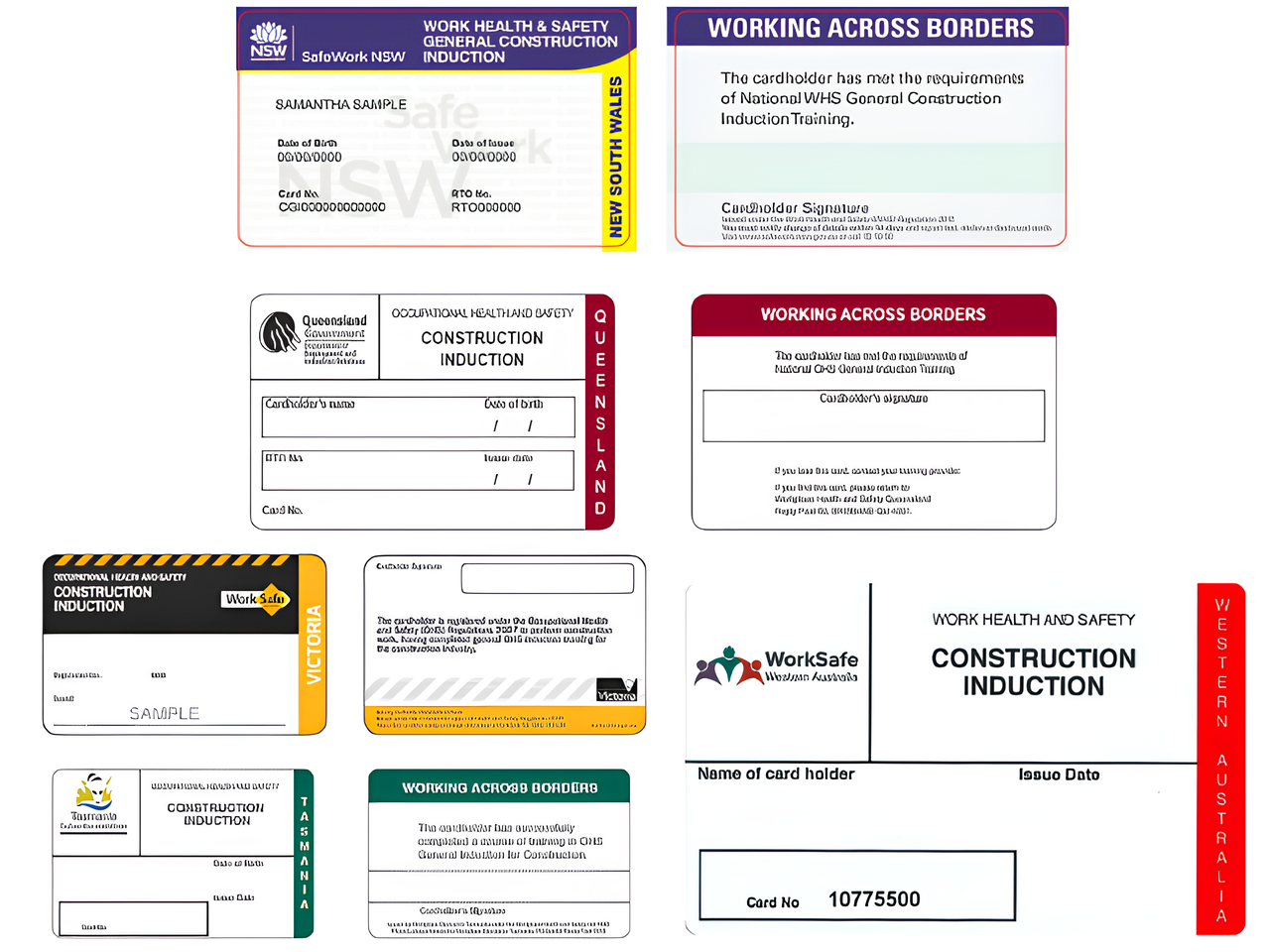
In Short
- Construction duties determine the requirement. White Cards are required for construction work and relevant construction-zone access, not automatically for every visitor or high-risk industry.
- Prepare for knowledge and practical assessment. You must demonstrate safety understanding and correctly fit the required PPE under assessor observation.
- Practice questions are study aids. These examples are not an official test or a substitute for completing your own assessment.
- Check the course requirements. Approved delivery, duration, identity, age, location and USI rules depend on the jurisdiction and your circumstances.
- Check your card and site requirements before starting. Interstate recognition, currency, temporary evidence, site induction and task licences are separate considerations.
Book your White Card with National White Card Courses
Ready to get started? Choose your state to find available classroom or online options, check the requirements and book your course with our team.
National Courses Pty Ltd · RTO 41072. WA courses are pending approval.
Need a hand choosing? Call 1300 988 181.
If you’re preparing for the Australian White Card course, this guide will give you a detailed breakdown of what’s covered, what to expect, and what you need to know to pass the test.
In this handy cheat sheet, we cover all the White Card questions and answers you might have, including how the course applies to working in the construction sector, a rundown of the course curriculum, and practice test examples similar to the White Card questions and answers PDF guides used by many training providers.
Use this guide to prepare for training and assessment. Passing a practice quiz does not issue a White Card or authorise you to start work; complete the approved course, card process and relevant site induction first.


How the White Card Course Runs
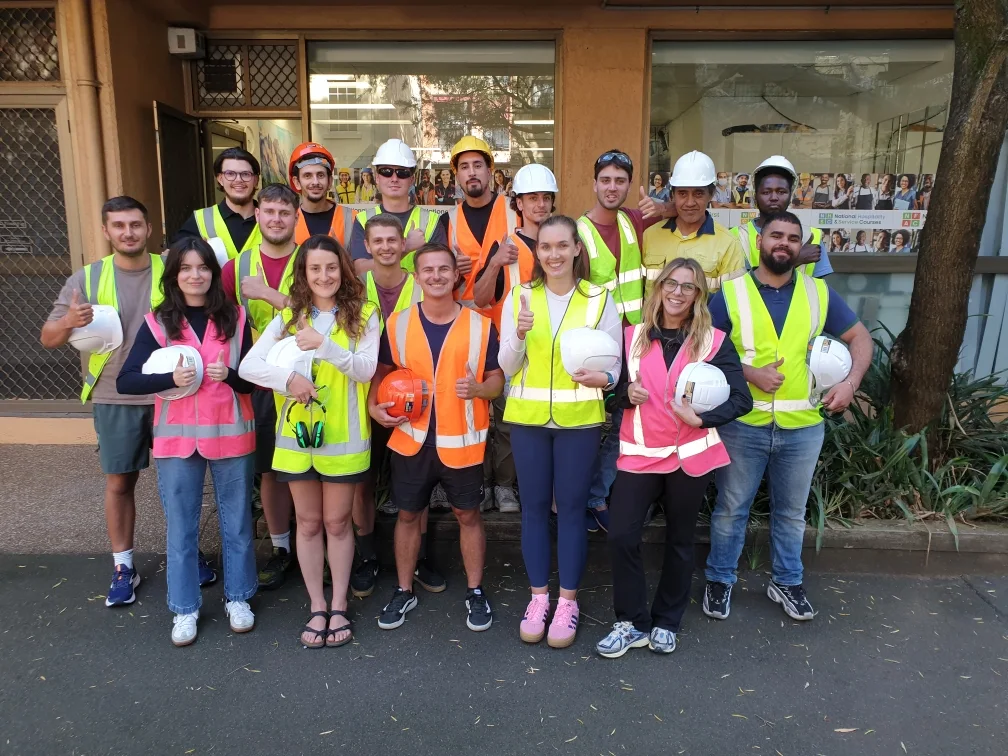
Courses are commonly delivered in one day, including instruction and assessment. Use your booking confirmation for the actual timetable; minimum hours vary by jurisdiction.
- Arrival: follow the check-in time in your booking confirmation.
- Breaks: follow the timetable provided by your trainer.
- Finish: allow the full required training and assessment time; extra support or reassessment may take longer.
The course includes instructor-led presentations, group discussions, and real-world scenarios to make learning engaging.
White Card Test Topics at a Glance
| Topic | What You Need to Know |
| WHS Responsibilities | Worker and employer safety duties |
| Hazard Identification | Recognising site dangers |
| Risk Control | Hierarchy of control measures |
| Emergency Response | Fire and evacuation procedures |
| Safety Signage | Danger, warning, and mandatory signs |
What’s Covered in the White Card Course?
The White Card course is built around the national competency CPCWHS1001: Prepare to Work Safely in the Construction Industry. You’ll cover five key areas:
1. WHS Responsibilities
Businesses must ensure health and safety so far as reasonably practicable. Workers must take reasonable care, avoid adversely affecting others, and follow reasonable safety instructions and procedures. The course covers these distinct responsibilities, including:
- The employer’s responsibility to provide a safe workplace
- Worker obligations to follow safety procedures, report hazards and use personal protection equipment (PPE), and
- WHS law and how the legislation protects workers and the public from accidents and risk.
2. Identifying Hazards
Construction and job sites are considered high risk areas due to the hazards that are often commonplace within these environments. These hazards have the potential to cause immediate or long-term injury and even fatalities so must be recognised and carefully managed. Potential hazards include:
- Asbestos and silica dust: Invisible particles that can cause long-term health issues.
- Falling objects: Tools, debris, or materials can be deadly without proper controls.
- Electrical risks: Overhead powerlines, exposed wires, and damaged equipment.
- Unsafe manual handling: How to lift and move items safely.
3. Risk Management
Safely working on a job site isn’t just about recognising risks; it’s also about mitigating them. The White Card course covers a hierarchy of control measures that should be used to manage hazards and mitigate risk.
This hierarchy includes:
- Elimination: Remove the hazard completely.
- Substitution: Replace a high-risk activity with a safer one.
- Isolation: Restrict access to dangerous areas.
- Engineering Controls: Use equipment to reduce risks (e.g., barriers, ventilation).
- Administrative Controls: Training, signage, and policies.
- PPE: Your last line of defence, like hard hats and steel-capped boots.
4. Emergency Response
While the White Card course is designed to help people identify hazards and mitigate risks, in a busy or high-risk workplace environment, emergencies can happen. That makes preparation and response planning critical. The White Card course covers emergency response, including:
- Incident Response: Dealing with fires, structural collapses, or gas leaks.
- Evacuation Plans: How to exit safely and quickly.
- Emergency equipment: recognising equipment and its purpose, raising the alarm and following the site emergency plan. A White Card is not a first aid or specialist emergency-response qualification.
5. Understanding Workplace Signage
Safety signs are crucial for communication on construction sites. They help you understand potential dangers and risks, and also provide key information about activities that are happening in specific areas.
- Danger signs: Immediate life-threatening risks (e.g., “Live Wires”).
- Warning signs: Potential hazards (e.g., “Slippery Surface”).
- Mandatory signs: Actions required for safety (e.g., “Wear PPE”).
- Emergency signs: Directing to first aid stations, fire equipment, and exits.

What to Expect in the White Card Test
The White Card test ensures you’ve understood the key safety principles covered during the course. To help you feel prepared, here’s a breakdown of what’s involved in the White Card exam:
Test Format
The White Card test isn’t overly complicated, but it is designed to gauge your understanding of the topics covered in the course. To achieve this the test has different components, including:
- Multiple-choice questions: Assessing your understanding of WHS principles.
- Short-answer questions: Applying your knowledge to real-world scenarios.
- Practical assessment: observed demonstration, including correctly fitting eye protection, hearing protection, a hard hat and high visibility clothing. Group discussion alone is not enough.
Topics Tested
The aim of the test is to determine your overall understanding of all the topics covered in the White Card course. That means there will be sections on each of the five main themes, including:
- WHS responsibilities for workers and employers
- Identifying and controlling hazards
- Interpreting workplace signage
- Emergency response procedures
- Correct use of PPE
Tips for Success
- Review the learning guide: Focus on WHS laws and hazard control principles to make the course easier to follow.
- Pay attention to real-world examples: Your course instructor will discuss a series of real world examples during training. These often show up in the test, so it’s a good idea to take note when practical scenarios are mentioned.
- Focus on the “why”: Much of the White Card training is about common sense. When you concentrate on understanding why WHS rules exist, it makes them easier to apply.
- Think practically: Completing the course is about considering how safety theory translates to the real world. During the training, it helps to apply the principles to real-world scenarios, rather than just memorising them.

White Card Questions and Answers PDF Practice Guide
As mentioned, the White Card test is designed to test your knowledge on topics such as Workplace Health & Safety, risk mitigation, hazard assessment and emergency response.
The following White Card questions and answers can be used as a practice test guide similar to a White Card questions and answers PDF used by many training providers.
Please note: These are sample questions only. The actual test questions will vary depending on your training provider and delivery method.
White Card Questions and Answers (Practice Test Guide)
These questions are just examples to help you understand the kind of content and difficulty you might see. They’re not taken from any real test in any state, but they’re written to be similar in style and level. The goal is simply to give you a clear idea of what to expect.
Question 1: Why is it important to keep walkways clear?
- To save space
- To prevent slips, trips and falls
- To walk faster
- To look neat and tidy
(Answer: B)
Question 2. Can a worker be fined for ignoring serious safety requirements?
- Yes, workers can be personally fined
- No, only the company can be fined
- No, they just get fired
- Only if they injure someone
(Answer: A)
Question 3: What is the main purpose of Workplace Health & Safety (WHS) laws?
- To increase business profits
- To protect workers and others from harm
- To make workplaces more competitive
- To reduce paperwork
(Answer: B)
Question 4: What should you do if you notice a safety hazard on site?
- Ignore it if it’s not your job
- Report it to your supervisor or site manager
- Fix it yourself without telling anyone
- Wait until the end of the day
(Answer: B)
Question 5: Which item is considered Personal Protective Equipment (PPE)?
- Hard hat
- Laptop
- Calculator
- Clipboard
(Answer: A)
Question 6: What should you do before using unfamiliar equipment on a construction site?
- Use it immediately
- Ask a co-worker to try it first
- Receive proper training or instructions
- Ignore the instructions
(Answer: C)
Question 7: Why is proper manual handling important on construction sites?
- To save time
- To prevent injuries such as strains and sprains
- To avoid using machinery
- To reduce paperwork
(Answer: B)
Enrol in a Construction White Card Course Near You
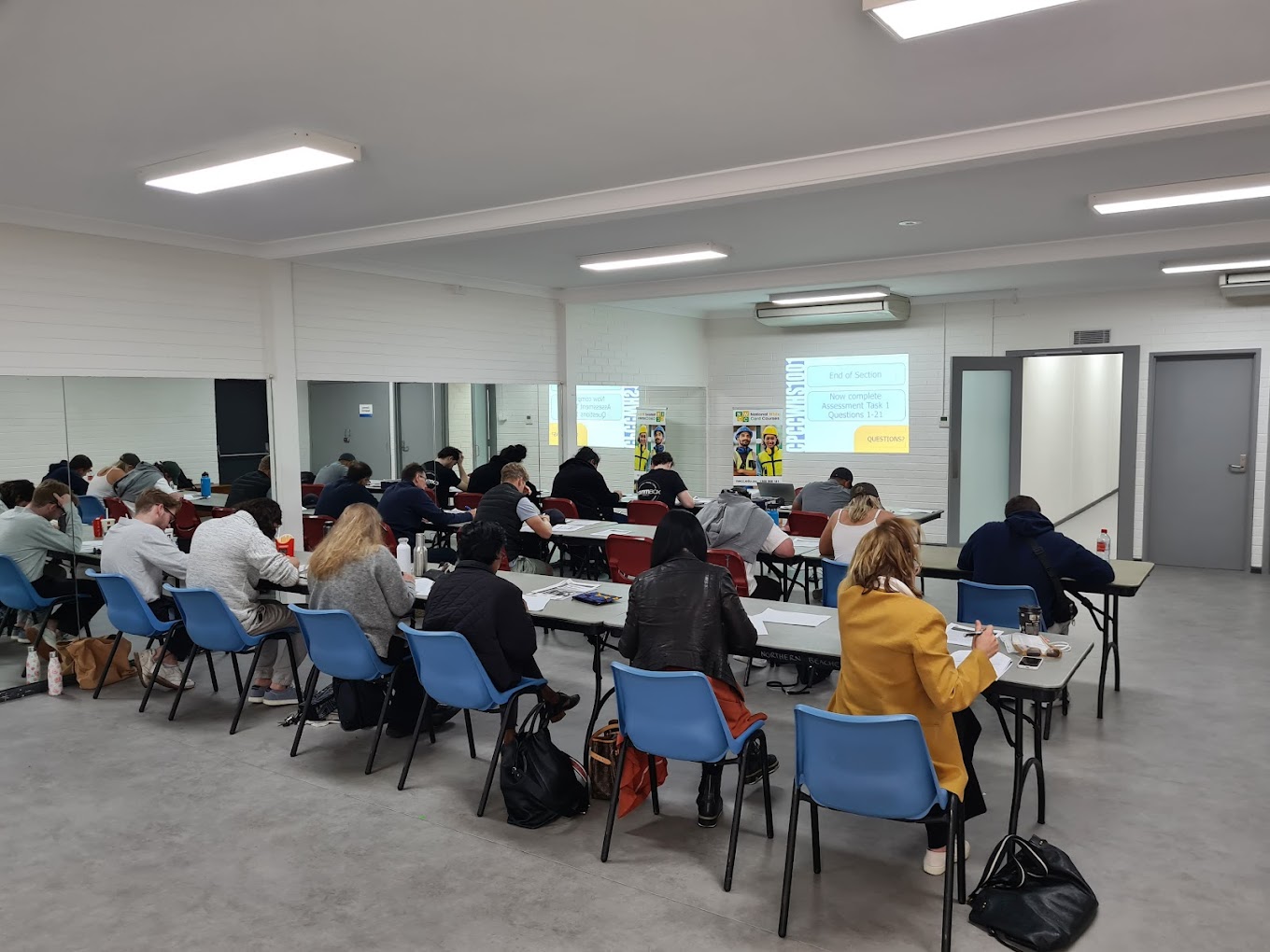
National White Card Courses is an accredited Registered Training Organisation (RTO 41072) providing nationally recognised White Card courses in Australia.
Our courses follow the approval and assessment requirements of the issuing jurisdiction. Contact us to confirm available locations and delivery options.
Our courses include trainer guidance, knowledge assessment and observed practical PPE tasks.
Approved live online options require real-time participation and assessor observation. We explain the identity, location and card requirements before you enrol.
After successful assessment, we issue your training evidence and explain the card process. Current, valid cards are generally recognised interstate; work rights, site induction and task licences remain separate.