
How to Get a FIFO job: Step-by-Step Guide
FIFO jobs can offer strong pay, long breaks and opportunities across mining, construction and remote site services. Getting your first FIFO role can be competitive, but entry-level jobs are available in areas such as cleaning, catering, maintenance and site support.
This guide explains how to get a FIFO job in Australia, what training you may need and where to look for work.
10-minute read
In Short
- FIFO stands for Fly-In Fly-Out, where you travel to remote worksites for scheduled periods before returning home for time off.
- You can get a FIFO job without mining experience, although entry-level positions can be competitive.
- Qualifications depend on the role, with some jobs requiring trade qualifications, safety training, licences or a White Card.
- A strong resume and relevant experience in construction, hospitality, cleaning, transport or other industries can improve your chances.
- FIFO work can be financially rewarding, but long shifts, remote conditions and extended periods away from home are important considerations.
Book your White Card with National White Card Courses
Ready to get your first FIFO job? You need a White Card before starting. Check the requirements and book your spot at the next available White Card course.
Need a hand choosing? Call 1300 988 181.
What is a FIFO job?
FIFO stands for Fly-In Fly-Out, a working arrangement where you are flown to remote worksites for a set period before returning home for scheduled time off.
It’s common in Australia’s mining, resources, construction and energy industries, where projects are often located hundreds or even thousands of kilometres from major population centres.
Rather than permanently relocating, you stay in employer-arranged accommodation near the worksite. FIFO rosters vary depending on the employer and project. Common arrangements include:
- 8 days on, 6 days off (8:6): Eight consecutive days working, followed by six days off.
- 2 weeks on, 1 week off (2:1): Fourteen days working, followed by seven days off.
- 2 weeks on, 2 weeks off (2:2): Two weeks at work followed by two weeks at home.
- 3 weeks on, 1 week off (3:1): A longer working period, sometimes used for construction projects.
Shifts are often around 12 hours, although working hours and roster arrangements vary. FIFO jobs are particularly common in Western Australia, Queensland and the Northern Territory. Some employers also offer drive-in drive-out (DIDO) and bus-in bus-out (BIBO) arrangements.

Can you get a FIFO job with no experience?
Yes. It’s possible to get a FIFO job without previous mining experience, but that doesn’t mean you can get one without any relevant skills.
Entry-level FIFO positions can be competitive and employers prefer candidates who are reliable and have experience in physically demanding or structured workplaces.
If you’re looking to break into the industry, these are a good starting point:
| FIFO job | What the work involves |
|
Utility worker |
Cleaning, laundry, housekeeping and general camp services |
|
Kitchen hand |
Food preparation, cleaning and assisting catering teams |
|
Trades assistant |
Supporting qualified tradespeople with tools, materials and general tasks |
|
Driller’s offsider |
Assisting drilling crews with equipment and physically demanding work |
|
Mine site cleaner |
Cleaning accommodation, offices and communal facilities |
|
General labourer |
Manual handling, site preparation and construction support |
|
Stores or warehouse assistant |
Managing stock, equipment, deliveries and supplies |
Not every employer accepts inexperienced applicants. If you can’t find an entry-level FIFO position, get some experience in a similar role closer to home instead.
How to get a FIFO job in Australia: 8 steps
With competition for entry-level positions often strong, it pays to have a clear plan and understand what employers are looking for.
The following eight steps will help you understand the process and getting ready for your first FIFO role.
Step 1: Decide what type of FIFO job you want
Before applying, consider which roles suit your existing skills, qualifications and interests.
If you have a trade qualification, you might explore FIFO opportunities in electrical work, mechanical maintenance, welding or construction.
If you’re new to the industry, consider entry-level positions in camp services, hospitality, or general site support.
It’s also worth considering your long-term career goals. A FIFO utility position may help you become familiar with remote work, while a construction or trades assistant role could provide experience relevant to a future trade or mining career.
Step 2: Check the qualifications and licences you need
There is no single qualification that allows you to work in every FIFO job. Requirements depend on the industry, location and duties involved.
Common requirements may include:
- Australian work rights: Employers require evidence that you’re legally entitled to work in Australia.
- Driver’s licence: A current driver’s licence is frequently requested for operational and site-based roles.
- White Card: Required for construction work covered by general construction induction requirements, including relevant construction activities on mining sites.
- Working at heights training: May be necessary for jobs involving elevated work.
- Confined space training: Often required for maintenance and industrial roles involving confined spaces.
- High risk work licence: Required for particular activities, such as operating certain cranes, forklifts or rigging equipment.
Some employers also require role-specific training, site inductions or verification of competency before work begins.
Don’t assume you need every possible safety ticket before applying. Check several advertisements for the type of job you want and identify which qualifications are consistently requested.
Do you need a White Card for FIFO work?
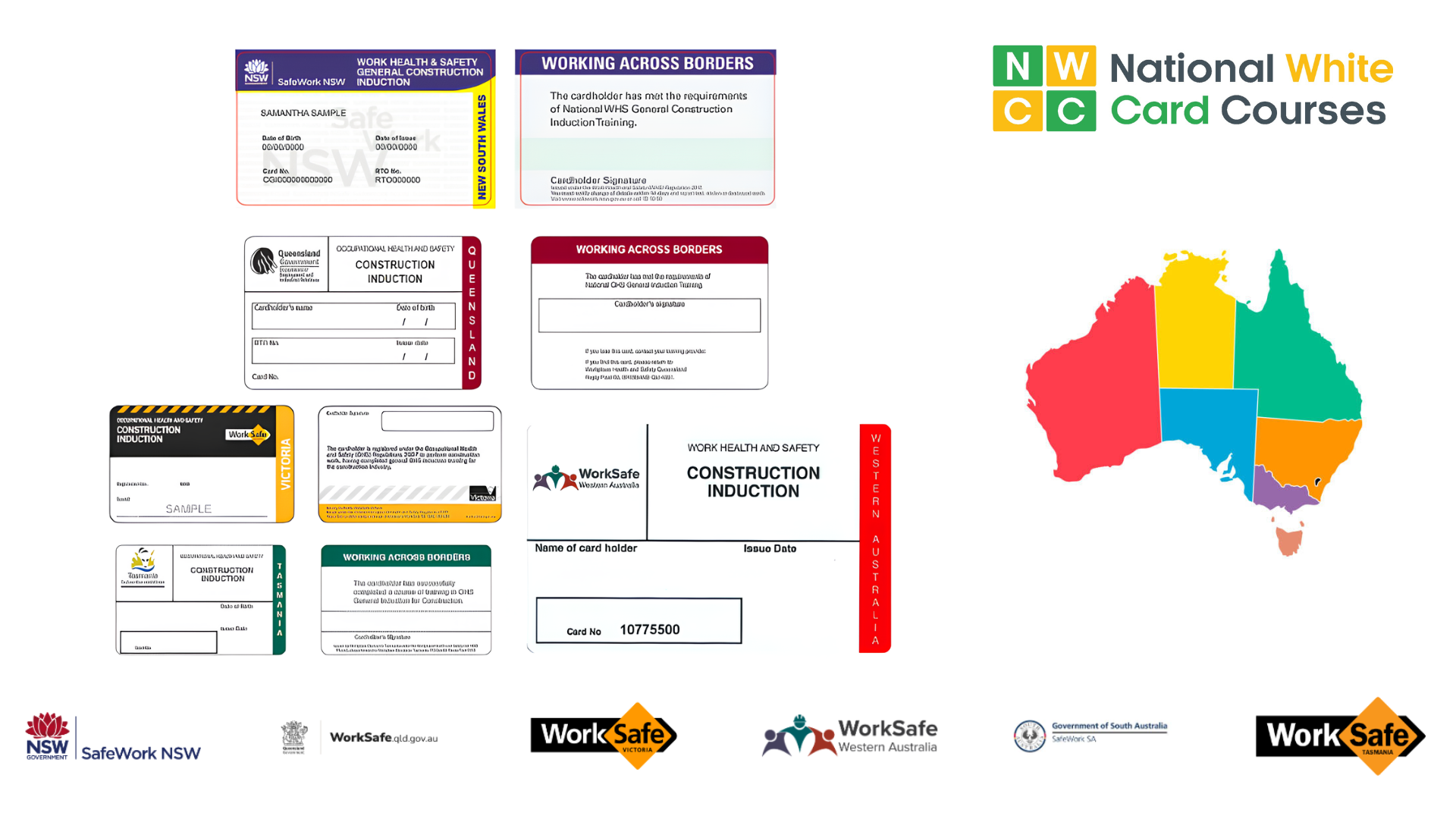
A White Card is an important qualification for many FIFO construction jobs. A White Card demonstrates that you’ve completed general construction induction training, covering fundamental workplace health and safety requirements, common construction hazards and risk controls.
The nationally recognised unit is CPCCWHS1001 – Prepare to work safely in the construction industry.
You may need a White Card for FIFO work that involves:
- Construction or expansion of mine site facilities.
- Civil construction and infrastructure projects.
- Building maintenance involving construction work.
- Construction-related labouring or trades assistance.
- Other construction activities undertaken at remote worksites.
However, if you work exclusively in camp catering, cleaning or particular mining operations, you may not need a White Card unless your duties involve construction work or your employer imposes additional site access requirements.
National White Card Courses offers White Card training to help you meet general construction induction requirements.
Step 3: Gain relevant experience if you’re starting from scratch
One of the biggest challenges trying to get a FIFO job without experience is showing that you’re ready for the demands of remote work.
Experience in construction, including general labouring, trade assistance, civil works and equipment handling, can provide a useful foundation for FIFO work.
Similarly, a background in hospitality, particularly commercial kitchens, catering, food preparation or cleaning, can be valuable if you’re seeking a role in remote accommodation and camp services.
Warehousing experience with stock management, forklift operation and manual handling can also be relevant.
Even agricultural work can provide transferable skills, particularly if you’re accustomed to working outdoors, operating machinery or performing physically demanding tasks.
Employers also value punctuality, teamwork, communication and a willingness to follow safety procedures.
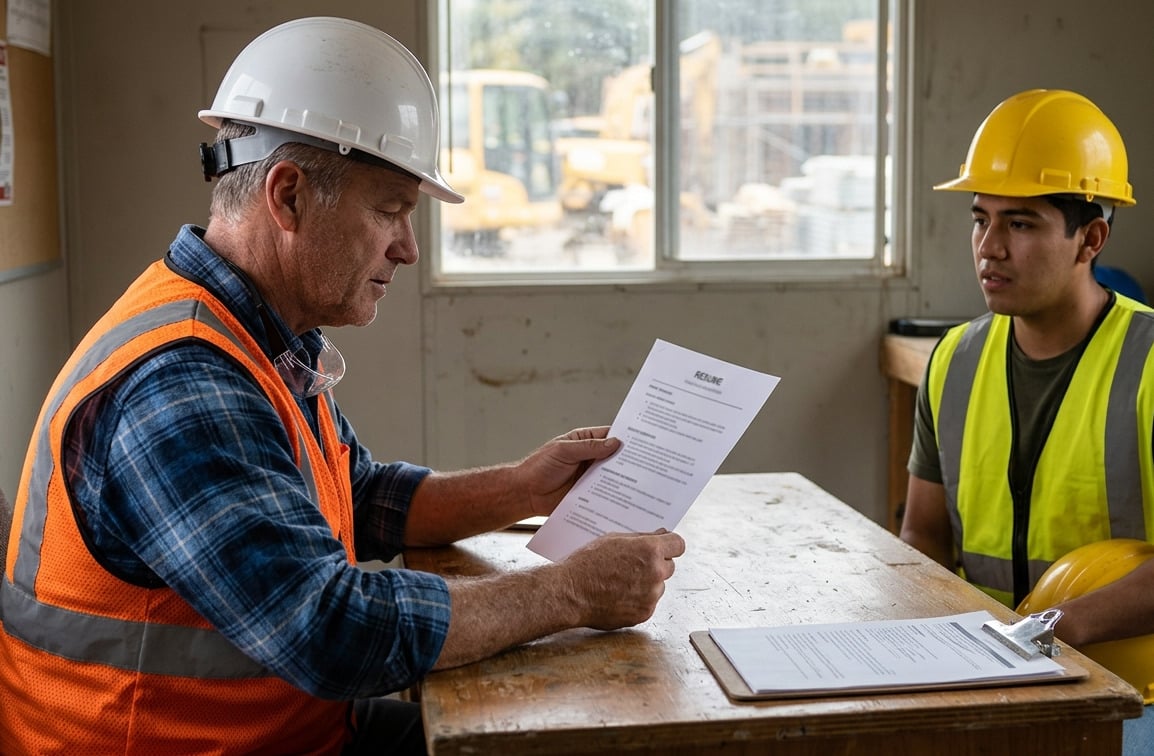
Step 4: Prepare a FIFO-ready resume
Your resume is often the first opportunity to convince an employer that you’re suitable for FIFO work. It should be clear, concise and tailored to the position you’re applying for.
Include:
- Contact information – Your name, phone number, email address and location.
- Professional summary – A short introduction explaining your experience, relevant skills and interest in FIFO work.
- Employment history – Previous positions, responsibilities and achievements.
- Qualifications and licences – Relevant tickets, trade qualifications, White Card and driver’s licence.
- Transferable skills – Safety awareness, physical work, teamwork, reliability and adaptability.
- References – Professional referees who can confirm your work ethic and experience.
If you have no mining experience, focus on what you’ve done in other jobs.
Tip: Avoid sending the same generic resume to every employer. Use the job advertisement to identify the most relevant skills and qualifications, then make these easy to find in your application.
Step 5: Find FIFO jobs and apply strategically
Popular job search platforms such as SEEK, Indeed Australia and Workforce Australia are good places to start looking for FIFO opportunities. You can also search the careers pages of major mining companies, including BHP, Rio Tinto and Fortescue.
Try using terms such as ‘entry-level FIFO jobs’, ‘FIFO jobs no experience’, ‘FIFO utility jobs’, ‘FIFO trades assistant’ and ‘FIFO construction jobs’.
Meanwhile, specialist recruitment agencies such as Techforce Personnel, WorkPac and Hays Recruitment also advertise FIFO opportunities across mining, construction and site services.
Step 6: Prepare for the interview
If your application is shortlisted, you may be invited to a telephone, video or face-to-face interview. Employers will generally want to understand whether you have the skills, attitude and reliability required for remote work.
Common FIFO interview questions often focus on your motivation for working remotely and your ability to handle the demands of the job.
For example, you might be asked why you want to work FIFO, how you would manage being away from home for extended periods, or how you cope with long shifts and physically demanding work.
Employers may also ask you to describe situations where you’ve followed workplace safety procedures, worked successfully as part of a team or responded to an unsafe situation.
Before your interview, prepare specific examples from your previous employment that demonstrate your reliability, problem-solving skills, safety awareness and ability to work well with others.
For safety-related questions, demonstrate that you understand the importance of identifying hazards, following procedures, reporting concerns and speaking up when something doesn’t seem right.
Employers want to see that you take safety seriously and aren’t just attracted by the salary.

Step 7: Complete pre-employment checks
If your application is successful, you’ll need to complete several checks before receiving final clearance to start work.
Depending on the employer and position, these may include a pre-employment medical assessment, drug and alcohol screening, employment and reference checks, and verification of qualifications and licences. Some employers may also require police or background checks.
For physically demanding roles, you may need to undergo a functional capacity or fitness assessment to determine whether you can safely perform the duties involved. Pre-employment medical assessments are also common in mining and construction, helping employers assess your ability to meet the physical and health requirements of the position.
It’s also worth remembering that drug and alcohol testing may continue throughout your employment, with many mining and construction sites enforcing strict workplace safety policies.
Step 8: Complete your site induction and prepare for your first swing
Once you’ve been offered a position and completed the necessary checks, you’ll generally need to undertake a site-specific induction. This introduces you to the workplace, its safety procedures, emergency arrangements, potential hazards and operational requirements.
Your employer should provide information about flight arrangements, departure locations, accommodation and meals, as well as your shift schedule and the PPE and equipment you’ll need. You’ll also learn about camp rules, available facilities and procedures for communicating with colleagues or responding to emergencies.
Before travelling, make sure you understand what you need to bring, what your employer will provide and where you need to be for your first shift. Remember, even if you already hold a White Card or other safety qualifications, you’ll still need to complete any site-specific induction and training required for your role.
How much do FIFO jobs pay in Australia?
One of the biggest attractions of FIFO work is the potential to earn a higher income than in comparable roles closer to home.
According to Jobs and Skills Australia, median weekly earnings in the mining industry are $2832, compared with $1741 across all industries, based on August 2025 earnings data. However, these figures cover the broader mining workforce, not just FIFO employees or entry-level positions.
Your earning potential depends on your occupation, qualifications, experience, employer and roster. Some FIFO positions also include allowances, overtime or other benefits.
When comparing job offers, consider the total hours worked, whether superannuation is included, and which travel and living expenses the employer covers.
What are the challenges of FIFO work?
While FIFO jobs can offer attractive pay and extended time off, the lifestyle isn’t suitable for everyone. Before accepting a position, it’s important to understand some of the challenges.
Time away from family and friends
Working away for weeks at a time can affect relationships, family responsibilities and social activities. You may miss birthdays, sporting events, school activities and other important occasions.
The separation can still be difficult even if you maintain regular communication and have quality time at home.
Long hours and physical demands
Many FIFO positions involve long shifts, early starts and physically demanding work. You may also work in extreme heat, dusty environments or challenging weather conditions.
Fatigue management is particularly important, especially when working consecutive shifts or rotating between day and night work.
Remote living conditions
FIFO accommodation varies between employers and worksites. Some camps provide private rooms, gyms, dining facilities and recreational areas. Others offer more basic accommodation.
Even well-equipped camps can feel isolating, particularly if you’re accustomed to spending your evenings with family or friends.
Adjusting to life at home
Moving between a highly structured work environment and extended periods at home can also take some adjustment. You may enjoy the flexibility, but establishing consistent routines can still be difficult.
Before accepting a FIFO position, consider how the roster will fit with your personal commitments, relationships and wellbeing.

Book your White Card with National White Card Courses
Ready to get started? Head over to your state page, check the requirements and book your course to look for a FIFO job and making real money.
Need a hand choosing? Call 1300 988 181.