


In Short
- The White Card course is designed to be accessible. Even participants with little or no construction experience can complete it in a single day.
- Competence matters: Our trainers teach the required material and explain assessment. You must demonstrate the required knowledge and practical skills to pass.
- The White Card is essential for construction jobs in Australia. Completing the course equips you with the skills and confidence to work safely on any construction site.
Book your White Card with National White Card Courses
Ready to get started? Choose your state to find available classroom or online options, check the requirements and book your course with our team.
National Courses Pty Ltd · RTO 41072. WA courses are pending approval.
Need a hand choosing? Call 1300 988 181.
You’ve booked your White Card course but now you might be wondering, is the White Card course hard to pass?
Short answer? No. In fact, the training is designed so people with little or no construction experience can complete it successfully in a single day. Still, it’s completely normal to want to know:
- Is the White Card course hard?
- Is the White Card test hard?
- What happens if you fail the assessment?
The good news is that the course is straightforward, practical and focused on real-world safety situations rather than complex theory. As long as you pay attention during the training and take the assessment seriously, most people pass without any problems.
To help you understand what to expect, let’s take a closer look at how the course works and why it’s not very hard.
Is the White Card Test Hard?
The assessment is another area where people often worry. Naturally, many students wonder “is the white card test hard?” In most cases, the course is not hard at all.
Assessment checks competence in CPCWHS1001. It includes knowledge, communication and practical demonstration, not just a quiz. Providers may use questions, scenarios and observation, but all required outcomes must be demonstrated. Methods can include:
- multiple-choice questions
- short written answers
- hazard identification exercises
- trainer observation during activities
All learners must demonstrate correct selection and fitting of eye protection, hearing protection, a hard hat and high-visibility clothing. Practical assessment is compulsory, whether observed in person or through an approved real-time delivery arrangement.
Because the questions are based directly on the training material, students who participate and pay attention usually find the assessment manageable.

How Training Helps You Prepare
The course is designed for people new to construction. Passing depends on demonstrating all required knowledge and skills; attendance alone does not guarantee competency.
Everything you’re assessed on is covered during the course itself, so there’s no independent study or prior knowledge required.
Trainers want you to actually understand the material, so if there is anything that isn’t clear, they’ll run through it again. The training doesn’t require advanced reading or technical knowledge either. It’s all practical safety awareness that anyone walking onto a worksite should know.
On top of that, you’ll have enough time to read through the assessment questions carefully and think before you answer, so there’s no need to rush.
Situations Where People Might Find the Course Harder
Although the White Card course curriculum and content is generally straightforward, there are a few situations where you may find it more challenging.
- Not paying attention during the training. The course only lasts for one day, and missing important explanations can make the assessment more difficult.
- Language barriers. Participants who are not confident in English may need extra time to understand certain safety terms or instructions.
- Delivery requirements: Attend the full approved course and participate actively. Do not assume self-paced online modules are permitted in your jurisdiction.
Fortunately, these challenges are usually easy to overcome with a bit of preparation and focus. We have a handy learning guide here to assist.
Tips to Make the White Card Course Easier
If you’re worried about whether the White Card course is hard, a few simple tips can help make the experience smoother.
- Pay attention during the training: The most important step is simply listening carefully and engaging with the material.
- Ask questions if you’re unsure. Trainers are there to help you understand the content. If something doesn’t make sense, asking for clarification can make a big difference.
- Think about real-life safety situations. When answering questions, imagine how the situation would play out on a real construction site. This often makes the safest answer clearer.
- Take your time with the assessment: There’s usually no need to rush. Reading questions carefully helps avoid simple mistakes.
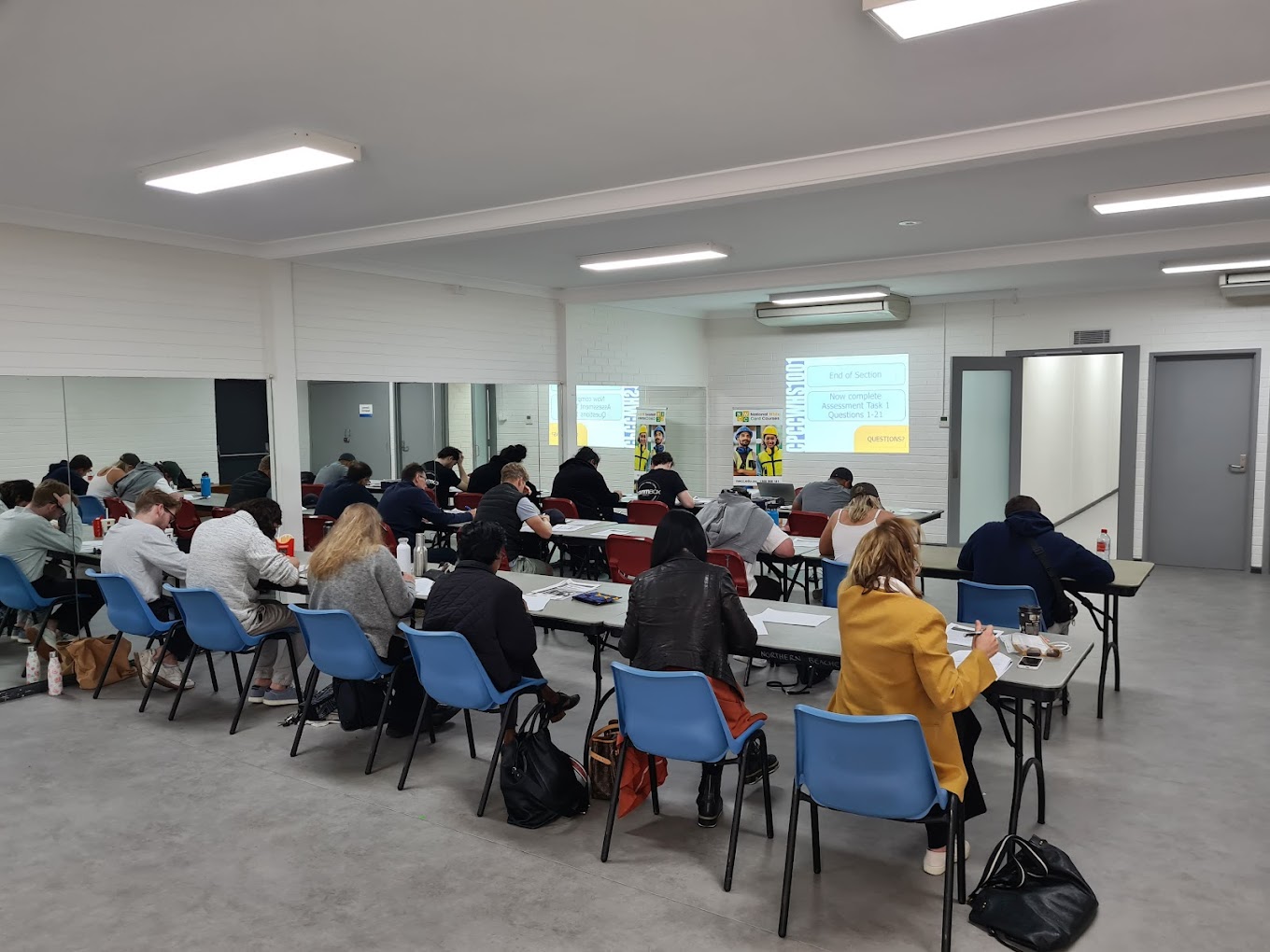
What Happens if You Fail the Assessment?
If you are assessed as not yet competent, we explain the gaps and the applicable support and reassessment process. Check our current terms for permitted attempts, timing and any fees.
Reassessment is based on evidence of competence. Extra support cannot remove mandatory skills or assessment requirements.

Why the Course is Still Important
Even though the course isn’t particularly difficult, it plays a crucial role in construction site safety.
Construction remains one of Australia’s higher-risk industries, and accidents can happen when workers aren’t aware of hazards or safety procedures.
The White Card course helps ensure that everyone on site understands how to:
- recognise potential hazards
- follow workplace safety rules
- communicate risks to supervisors
- protect themselves and others
These skills are essential whether you’re a tradesperson, labourer, supervisor or even a delivery driver visiting a worksite.
What You Learn During the White Card Course
The course covers Australian workplace safety legislation, including the responsibilities of workers, supervisors, and employers under WHS laws.
You’ll learn to identify common site hazards, such as working at heights, moving vehicles and plant equipment, falling objects, electrical risks, and slips and trips and how to apply basic risk control measures to deal with them.
PPE gets covered too, so you’ll know what to wear and when. The course also walks you through incident reporting, which matters more than people think. Knowing how to flag an unsafe condition quickly can prevent serious injuries on site.
The course follows CPCWHS1001 on the National Training Register. Regulators set additional delivery and card rules; approved online options and classroom requirements vary. Safe Work Australia is not the RTO approval or card-issuing authority.

Why Choose National White Card Courses?
Our courses follow the approval and assessment requirements of the issuing jurisdiction. Contact us to confirm available locations and delivery options.
Our courses include trainer guidance, knowledge assessment and observed practical PPE tasks.
Approved live online options require real-time participation and assessor observation. We explain the identity, location and card requirements before you enrol.
After successful assessment, we issue your training evidence and explain the card process. Current, valid cards are generally recognised interstate; work rights, site induction and task licences remain separate.
