How to Obtain a White Card in Australia: A State-by-State Guide

Published: July 25, 2025 at 5.40PM |  Published: March 10, 2026 at 3.00PM | Read time: 10 minutes

Share

  • What is a White Card? The White Card is a nationally recognised certificate that shows you have completed the required safety training to work in construction across Australia.
  • You can get a White Card in Australia in one day: You can enrol in a nationally recognised course (CPCWHS1001) with an accredited Registered Training Organisation (RTO), complete the training and receive your certification.
  • Face-to-Face Courses Are Highly Recommended: In-person courses are preferred, as they offer hands-on training and the chance to engage directly with instructors for a better understanding of safety practices.
  • State-Specific Requirements: The training is nationally recognised but each state regulator (such as SafeWork NSW or WorkSafe Queensland) sets specific rules.
  • Avoid Online Scams: Be cautious when selecting a provider. Only choose accredited courses to ensure that your White Card is valid and recognised across Australia.

If you’re planning to work in the construction industry in Australia, securing your White Card is not just a formality, it’s a legal requirement. But what’s involved in getting a White Card, is it standard across all states and territories, and where can you obtain one? 

In this guide we look at how to get a white card in Australia, including when it’s needed, the process of obtaining White Card accreditation, and how certification works in each Australian state and territory. 

But first, let’s start with the basics…

Select Your State

You must complete your White Card course in the state where you live. Please select the state you live in below.

What is a White Card?

A White Card (often referred to as a General Construction Induction Card), is an essential certification for anyone aiming to work in construction and other sectors across Australia.

When you obtain an official white card, this demonstrates that you have successfully completed training centered on workplace health and safety.

Its primary purpose is to guarantee that all workers are informed about the potential dangers they might face on construction sites and are equipped with the knowledge of the safety measures needed to minimize these risks.

Read more: What is a White Card: A Guide About Training, Assessment, and Compliance in Australia


Who needs a White Card in Australia?

A White Card is not just specific to the construction sector nor is it just for tradespeople.

White Cards are also needed in sectors such as landscaping, demolition, and manufacturing, and are required by everyone who regularly visits a job site, including direct construction workers (like carpenters, electricians, and labourers) and also supervisors, inspectors, office staff attending a site, and even some delivery drivers.

You first need to complete a course with registered training organisation (RTO), and the certification will then be release by your relevant state-based WorkSafe authority.


Who is Eligible for a White Card in Australia?

If you’re over the age of 14, you are eligible to obtain a White Card in Australia, and that’s regardless of citizenship or visa type.

Meanwhile, obtaining your White Card in Australia is a simple and straightforward process: simply undertake a recognised course in your state or territory, pass a test, and apply for your White Card with your relevant state authority, such as SafeWork NSW, WorkSafe QLD, or WorkSafe VIC,.

Once issued, your White Card is recognised nationally and remains valid as long as you do not take a break from the industry for more than two consecutive years.

White Card graduates wearing high-vis vests and helmets posing after training.


How to Get a White Card in Australia (Step-by-Step)

Getting a White Card in Australia involves completing a nationally recognised construction safety course with an approved training provider. The process is straightforward and can usually be completed in a single day.

1. Choose a Government-Approved Training Provider (RTO)

To get a White Card, you must complete the nationally recognised unit CPCCWHS1001 – Prepare to Work Safely in the Construction Industry through NWCC, a Registered Training Organisation (RTO) approved by your state regulator.

Training providers must meet strict standards to deliver this course, so always check that the organisation is accredited before enrolling.

Book Now


2. Get Your Unique Student Identifier (USI)

Before starting any nationally recognised training in Australia, you need a Unique Student Identifier (USI).

Your USI is a personal reference number that keeps a record of your training and qualifications. It’s free to create and only takes a few minutes online.

3. Book a White Card Course in Your State

White Card training must be completed with a provider approved to deliver the course in your state or territory. 

When booking your course, check the training format (face-to-face or online where permitted) and make sure you have the required identification documents.

4. Attend the Training and Complete the Assessment

The course usually takes around 4–6 hours and covers essential construction site safety topics, including hazard identification, risk management, and workplace health and safety responsibilities.

You’ll need to complete a short assessment to demonstrate that you understand the key safety principles.

5. Receive Your White Card Certificate

After successfully completing the training and assessment, you will receive your White Card, which proves you have completed the required construction induction training.

Your White Card allows you to work on construction sites anywhere in Australia, although training requirements can vary slightly between states.
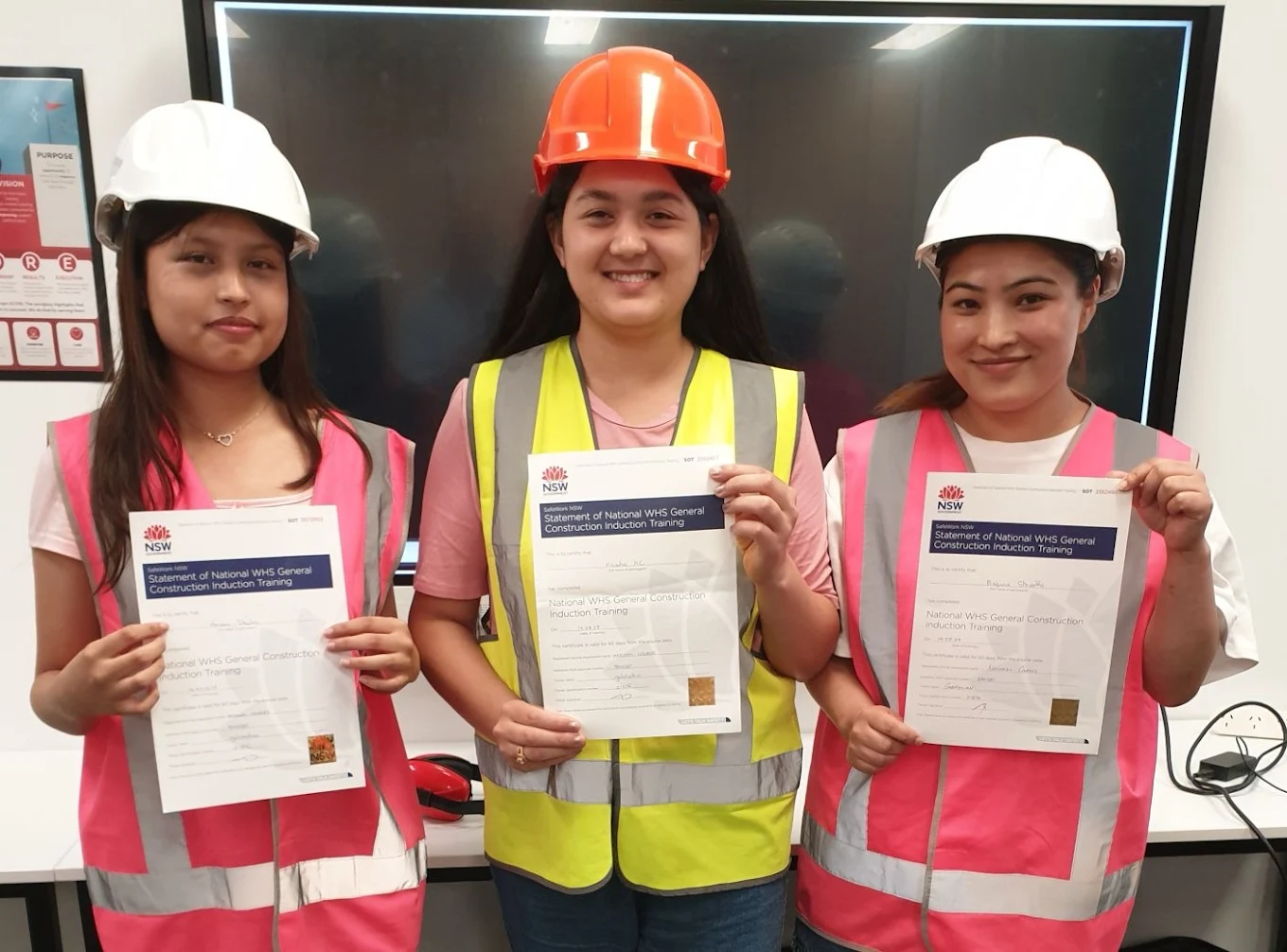
Three trainees wearing safety vests and helmets, holding White Card certificates after finishing construction induction training.


State-by-state White Card requirements

While the process of obtaining a White Card is standard regardless of the state or territory you are in, state regulations about the certification can change.

So let’s look at each state and territory’s current White Card requirements to help you understand exactly what’s expected of you regardless of whether you’re in New South Wales, Queensland, Victoria, or any other state.


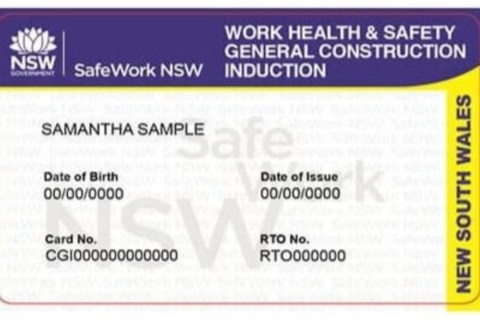
New South Wales (NSW)

Map of New South Wales

Virtual delivery is permitted in NSW, but fully self-paced online courses are not. You need a real trainer running the session in real time, so don’t get caught by providers offering pre-recorded courses claiming NSW compliance.

You’ll need 100 points of ID in original physical form. No photos, scans or photocopies accepted. Once you’re done, we submit everything to SafeWork NSW and you’ll receive a digital version within days to start work immediately, with the physical card arriving within 2–4 weeks.

NSW also now offers a permanent digital White Card you can store on your phone, which no other state currently does.

  • Format: Online components are available but NSW mandates that all White Card training must include a face-to-face component. This is crucial for ensuring that you fully understand and can apply safety protocols on a construction site. Only Registered Training Organisations (RTOs) approved by SafeWork NSW are authorised to deliver this training.
  • Course length: White Card training can be completed in as little as a day.
  • Requirements: You’ll need to provide valid identification and proof of residential address, especially if you’re completing part of the course online. The face-to-face sessions will cover critical areas such as hazard identification, emergency procedures, and safe work practices.
  • Costs: The course starts at $99 with NWCC. We are the cheapest white card provider in Australia.
  • Validity: Your White Card does not have an expiry date. However, it becomes void if you haven’t carried out construction work for two consecutive years or more.
 
VIEW OUR NSW WHITE CARD COURSES

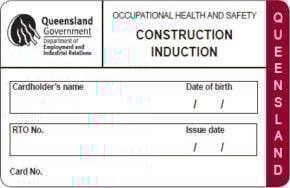
Queensland (QLD)

Map of Queensland

Queensland gives you more flexibility than most states: face-to-face classroom training is the standard requirement, but live virtual delivery via Zoom is also accepted through approved providers.

One thing that catches people out: you need to bring 3 forms of ID, with at least one showing your photo, which is more than any other state. You’ll also need a Unique Student Identifier (USI) before you can enrol, which is free to get at usi.gov.au.

There’s also a common misconception that you must be at least 14 to get a White Card in Queensland, that’s actually an NSW rule. WorkSafe QLD allows students of 13 years of age and older to register.

  • Training Format: While some online training is permitted, the state strongly advocates for face-to-face training sessions, which are mandatory for certain practical components. Training must be conducted by an RTO recognised by WorkSafe QLD.
  • Course length: White Card training can be completed within one day.
  • Requirements: Be prepared to participate in practical assessments that require your physical presence, even if you begin the course online. Identification and verification of residency are required before enrollment. The course includes essential training on safety laws, risk management, and emergency response.
  • Costs: The training starts at $99 with NWCC but it can be a little more expensive depending on locations like North Lakes, where it costs $110.
  • Card issue: After successfully completing the course, your training provider will issue a Statement of Attainment confirming you have completed the required training. Your physical card is then issued through the relevant process outlined by WorkSafe Queensland.
  • Validity: Once obtained, your White Card is valid for life, with no need for renewal unless new legislative changes dictate otherwise.
VIEW OUR QLD WHITE CARD COURSES

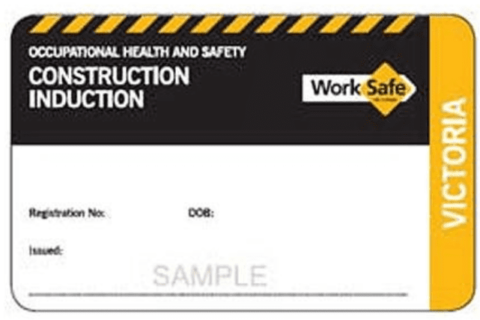
Victoria (VIC)

Map of Victoria, Australia

Victoria has some of the strictest White Card rules in the country. Unlike most other states, online White Card courses are not accepted. All training must be completed face-to-face since January 2023, so don’t get caught out by cheap online providers advertising Victorian compliance.

WorkSafe Victoria will not issue a White Card for any course completed outside of an approved RTO WorkSafe Victoria, so verifying your provider before booking is non-negotiable.

Once you finish, we notify WorkSafe and your physical card arrives by post within 7–14 days.

  • Training Format: In Victoria, all White Card training must be completed in person. Online-only courses are not accepted by WorkSafe Victoria. This in-person training is essential for covering practical safety protocols, risk assessments, and the correct use of personal protective equipment (PPE).
  • Course duration: Our courses are designed to be completed within a single day.
  • Requirements: To enrol, you must provide valid identification and attend the training at an approved RTO. Practical assessments are a core component of the course.
  • Costs: The course cost starts at $99 with NWCC but it can start at $110 in some locations like Melbourne.
  • Validity: Your White Card remains valid indefinitely, eliminating the need for renewal unless there’s a significant change in the regulations.
VIEW OUR VIC WHITE CARD COURSES

Tasmania (TAS)

White card regulations in Tasmania regulations strongly favour in-person training for obtaining a White Card, ensuring that workers are thoroughly prepared for construction site safety.

  • Training Format: White Card training in Tasmania must be completed in person, with online courses generally not accepted unless you have a valid reason, such as residing in a remote area. In-person white card training is essential for understanding and applying safety procedures effectively.
  • Requirements: You’ll need to present valid identification and attend the training at a WorkSafe Tasmania-approved RTO. The course includes practical assessments that are mandatory for all participants.
  • Costs: The cost for the course typically ranges from $120 to $170, reflecting the in-person training requirements.
  • Validity: The White Card issued in Tasmania is valid for life, with no mandatory renewals unless regulatory changes are introduced.


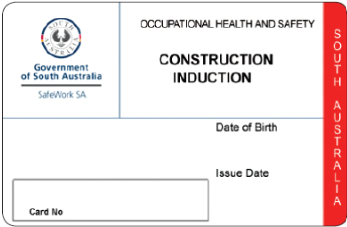
South Australia (SA)

In South Australia, White Cards are issued directly by the RTO, not by SafeWork SA. This is different to NSW and Victoria. Training must be completed face-to-face with a SafeWork SA approved RTO.

  • Format: Face-to-face only. Only RTOs approved to deliver CPCWHS1001 and who have entered into a formal agreement with SafeWork SA are authorised to issue cards.
  • Course length: A full day, covering hazard identification, WHS legislation, risk management, emergency response, and PPE use.
  • Requirements: You must be at least 16 years old to enrol. This is the highest minimum age of any state. Bring valid photo ID on the day.
  • Costs: White Card courses in Adelaide start at $99.
  • Card issue: Your RTO issues the card directly once you complete training. Keep a copy of your card and our details. SafeWork SA cannot reissue a card if it’s lost or damaged, so you’ll need to go back to the original RTO for a replacement.
  • Validity: No expiry date, but SafeWork SA recommends refreshing your training if you haven’t worked in construction for over two years.

Map of South Australia

Book Now


Western Australia (WA)

White Card regulations in Western Australia include a strong emphasis on face-to-face learning, particularly for the practical aspects of the course.

  • Training Format: WA allows for both online and in-person training, but the course must include interactive, real-time assessments that ensure active participation. The face-to-face elements are crucial for fully understanding workplace safety protocols.
  • Requirements: You must provide valid identification and complete all practical components of the course, which are mandatory even if you opt for online learning. The course content covers hazard identification, emergency procedures, and safe work practices.
  • Costs: The course typically costs between $70 to $120, depending on the RTO and the mode of delivery.
  • Validity: Once issued, your White Card in WA is valid indefinitely, unless future legislative changes require re-training.


The Best Way to Obtain Your White Card Anywhere in Australia

White Card courses are designed to cover important Workplace Health & Safety information, including hazard assessment, risk management, safety signage, personal protection equipment and more.

As a result, face-to-face Construction Induction courses are considered the preferred method to get your White Card anywhere in Australia.

But that’s not the only thing worth considering when looking for a course to suit your needs. 

If you’re looking for a White Card that is recognised anywhere in Australia, you must complete your training with NWCC, which offers a series of benefits.


After completing a white card course


Nationally Recognised and Accredited Training

Regardless of what state or territory you are in, WorkSafe authorities only recognise accredited courses completed with registered training organisations (RTOs).

Be sure to double check your course provider’s credentials to guarantee the training you receive meets the highest standards set by regulatory bodies across Australia.

When you enrol with an RTO, you can trust that your qualification will be accepted nationwide, giving you the flexibility to work in any state or territory.

Comprehensive, Reliable Instruction

RTOs that conduct in-person White Card courses are committed to delivering comprehensive and reliable instruction.

These organisations are subject to strict regulatory oversight, ensuring that they adhere to quality standards in curriculum, assessment, and trainer qualifications.

By choosing face-to-face training with an RTO, you benefit from direct interaction with experienced instructors who can provide clear, accurate information and guidance.

Rigorous Assessments

Any course you select should involve rigorous assessments that are conducted under the supervision of qualified trainers. This ensures you not only understand the theoretical aspects of workplace safety but can also demonstrate your knowledge in practical settings.

Hands-on assessments are designed to simulate real-world construction site scenarios, ensuring that you are truly prepared to apply your skills in a safe and effective manner.

Trustworthy and Consistent Standards

Training delivered by an RTO in a face-to-face setting guarantees consistency and trustworthiness. Unlike some online-only courses, which may vary in quality, face-to-face training ensures that all participants receive the same high standard of education. This consistency is vital in a field where safety and compliance are non-negotiable.

Assurance of Compliance

When you complete your White Card training through an RTO, you have the assurance that your qualification complies with all state and national regulations. This compliance is crucial for your ability to work legally on construction sites across Australia.

RTOs are regularly audited to ensure they meet these regulatory requirements, giving you peace of mind that your training is legitimate and up to date.

Frequently Asked Questions

Conclusion

Obtaining a white card in any state or territory around Australia is a simple process, and you have to get prepared with our cheat sheet.

By opting for face-to-face training with a nationally recognised RTO, you’re investing in a qualification that carries significant weight across all of Australia.

An in-person approach to white card training ensures that you receive comprehensive training, hands-on learning experience, and direct feedback from experienced instructors.

You will also gain an official White Card that is accredited and nationally recognised, providing you with the qualifications required to work in the construction industry anywhere in Australia. 

Enrol in a Legitimate White Card Course

RTO-National-White-Card-Courses

When it comes to your safety and workplace credentials, don’t settle for less.

National White Card Courses is an accredited Registered Training Organisation (RTO 41072) providing nationally recognised White Card courses in Australia.

Our White Card training and certification is approved by all relevant government bodies, including SafeWork NSW, WorkSafe QLD, WorkSafe VIC, WorkSafe WA, SafeWork SA, and WorkSafe Tasmania.

We ensure you receive comprehensive, hands-on instruction that online courses simply can’t match.

By choosing National White Card Courses, you’re protecting yourself from the risks associated with online training — like potential scams, unrecognised certifications, and inadequate preparation for real-world scenarios.

Our White Card training provides you with a legitimate and valid White Card certificate that can be used anywhere in Australia.

VIEW OUR WHITE CARD COURSE LOCATIONS ACROSS AUSTRALIA