



In Short
- Construction work requires training: Other roles depend on duties and site access.
- Visitors need a specific assessment: An escorted visit to a separated area can differ from routine or unaccompanied access to operational zones.
- Site induction remains necessary: It cannot replace a legally required White Card.
- Approved delivery matters: Classroom and live online options depend on the jurisdiction and RTO approval.
- Keep your card current: A long absence from construction can trigger retraining requirements.
- Separate requirements apply: A White Card does not replace work rights, trade licences or task training.
Book your White Card with National White Card Courses
Ready to get started? Choose your state to find available classroom or online options, check the requirements and book your course with our team.
National Courses Pty Ltd · RTO 41072. WA courses are pending approval.
Need a hand choosing? Call 1300 988 181.
Builders, tradies, apprentices, labourers and traffic controllers need a White Card before working on a construction site. But what many people don’t realise is that visitors may also need a White Card, even if they’re only on-site for a short time.
Depending on the purpose of your visit, engineers, architects, surveyors, inspectors, delivery drivers, photographers, media crews, office staff and other professionals may all be required to hold a White Card before entering an active construction site.
The requirement depends on construction duties, routine or unaccompanied access to operational zones, and local rules. Hazard exposure matters for visitor safety controls, but does not by itself mean every visitor legally needs a White Card.
Australian Work Health and Safety (WHS) laws require anyone carrying out construction work, and many people who access active construction sites as part of their job, to have completed general construction induction training.
This guide explains who needs a White Card, who may be exempt, when visitors require one, and what alternative safety arrangements may apply if you’re only visiting a construction site.
Who Needs a White Card?
A White Card is required for construction work. It may also be required for people who routinely enter operational construction zones or need unaccompanied access. Duties, access arrangements and the relevant state or territory rules matter; a job title or short visit alone does not decide the requirement.
However, the following occupations will typically need a White Card before entering a construction site. A White Card is generally required for:
- builders
- apprentices
- labourers
- plumbers
- electricians
- carpenters
- traffic controllers
- site supervisors
- engineers inspecting worksites
- surveyors
- delivery drivers entering construction areas
- some temporary visitors
A White Card may not be required if you’re:
- visiting a site office only
- attending under supervision
- remaining outside active construction areas
- visiting under arrangements permitted by the regulator and site manager; an induction alone cannot replace a legally required White Card.

Understanding White Card Requirements
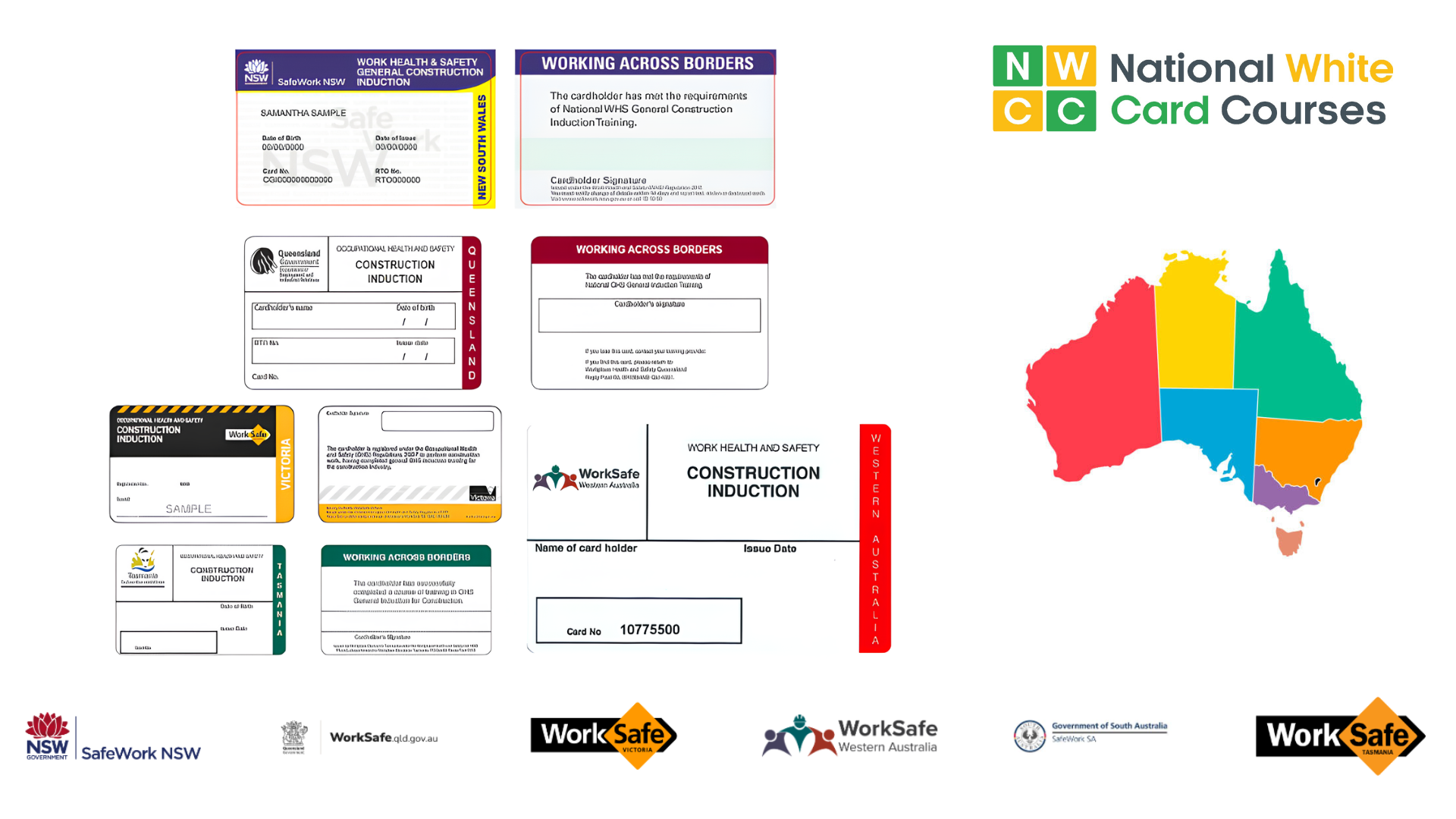
A White Card is the nationally recognised evidence that a person has successfully completed CPCWHS1001 Prepare to work safely in the construction industry. The training provides a foundation in workplace health and safety before a person begins work on a construction site.
State and territory safety laws govern construction induction, including WHS laws and Victoria’s OHS framework. Employers and principal contractors must ensure required training is completed. Current training is CPCWHS1001; a valid card from an earlier recognised unit is not invalid simply because the unit code changed. Training covers:
- common construction hazards
- risk assessment and hazard identification
- safe work practices
- emergency procedures
- personal protective equipment (PPE)
- workplace communication and reporting responsibilities.
Current, valid interstate White Cards are generally recognised across Australia. Course delivery approval, identity checks and learner-location requirements are separate and depend on the issuing jurisdiction. Confirm an RTO’s approval for the delivery method before booking.
Who Needs a White Card?
One of the most common misconceptions is that only construction workers need a White Card. In reality, anyone who performs construction work or regularly enters active construction areas as part of their job may require one.
Below are some of the occupations commonly required to hold a White Card.

Tradespeople
Builders, carpenters, electricians, plumbers, painters, roofers, plasterers, tilers, concreters, landscapers and other trades working on construction sites must hold a White Card before commencing work.
Apprentices and Trainees
Most apprentices complete White Card training before starting work with their employer. Because apprentices spend much of their time on active construction sites, a White Card is generally one of the first qualifications they obtain.
Labourers
General labourers, demolition workers, civil construction workers and machine operators all require a White Card because they are directly involved in construction activities.
Site Supervisors and Project Managers
Construction managers, supervisors and forepersons also require a White Card. Although they may spend less time performing physical work, they still work within active construction environments and have responsibilities for workplace safety.
Engineers and Consultants
Structural engineers, civil engineers, building consultants and quantity surveyors frequently inspect worksites and therefore generally require a White Card when accessing construction areas.
Traffic Controllers
Traffic management personnel working around roadworks or civil construction projects often need a White Card because they operate within or alongside active construction zones.
Cleaners and Security Staff
People employed to clean newly constructed buildings or provide on-site security during construction projects may also require a White Card if they are regularly entering active construction areas.

Temporary Site Visitors
Temporary visitors do not automatically need a White Card. Check whether their duties involve construction work, routine access to operational zones or unaccompanied access, and whether a visitor exemption applies under the local rules.
Site management must assess the visit and arrange suitable induction, supervision and PPE. A visitor pass or escort cannot waive a legal training requirement.

Film Crews and Media
Marketing teams, photographers, drone operators and television crews often visit construction sites to capture project updates. If filming takes place within active work areas or requires moving around the site independently, a White Card is generally required.
However, if the crew remains under close supervision in designated safe areas for a short period, the site may permit access following a comprehensive visitor induction.
Engineers and Consultants
Professional consultants regularly inspect works, attend project meetings or conduct technical assessments. Where inspections involve walking through active construction zones, a White Card is usually required because the visitor is exposed to the same hazards as construction workers.
Inspectors and Auditors
Inspectors and auditors need a role-specific check. WorkSafe WA, for example, excludes government officials exercising statutory inspection duties in its guidance. That exclusion does not automatically cover private certifiers or auditors. Confirm the relevant regulator’s rules and site access arrangements.
Delivery Drivers
Whether delivery drivers need a White Card depends on the delivery process. Drivers who remain outside the construction zone or unload at designated receiving areas may not require one. However, drivers who regularly enter active work areas to unload materials or equipment are commonly required to hold a White Card.
Office Staff
Administrative employees may occasionally visit construction projects for meetings or inspections. If they remain inside site offices separated from construction activities, a White Card may not be necessary. If they enter active work areas, however, site management will often require one.

When is a White Card Required?
Construction work requires general construction induction training. Other roles may require it because of routine or unaccompanied operational-zone access. Common situations include:
- perform construction work
- supervise construction work
- inspect or assess construction activities independently
- regularly enter active construction zones
- move freely throughout a construction site as part of your role.
Even if construction isn’t your primary occupation, you may still need a White Card if your job places you in these environments on a regular basis.
When is a White Card Not Required?
There are situations where people can enter a construction site without holding a White Card. For example, members of the public attending an open inspection of a completed building, clients visiting a site office, or people delivering documents to reception may not require one if they never enter active construction areas.
Similarly, some sites permit short-term visitors under strict conditions, including:
- remaining under continuous supervision
- completing a site-specific induction
- wearing appropriate PPE
- staying within approved visitor areas
- following all directions from site management.
Ultimately, the principal contractor determines whether access can be granted safely while still complying with workplace safety legislation.
Alternative Site Safety Measures for Temporary Visitors
Where a White Card isn’t legally required, employers still have obligations under WHS legislation to ensure visitors can enter the workplace safely. This often involves implementing additional control measures before access is granted.
Site-specific Induction
Most construction sites require all visitors to complete a brief induction covering the unique hazards of that project. The induction may include:
- current construction activities
- emergency evacuation procedures
- restricted areas
- PPE requirements
- traffic management plans
- reporting procedures for hazards or incidents.
Unlike a White Card, this induction applies only to that specific site and does not replace nationally recognised construction induction training. This applies just as much on Melbourne building sites as anywhere else.
Escorted Access
Visitors without a White Card are often only permitted entry while accompanied by an authorised person.
An escort ensures visitors remain within approved areas, avoid hazardous activities and comply with site safety procedures throughout their visit. Escorted access is commonly used for:
- clients
- journalists
- prospective purchasers
- short-term visitors
- government officials attending meetings.
Employer Responsibilities
Employers and principal contractors play a critical role in determining who needs a White Card before entering a construction site. Before allowing anyone onto an active worksite, employers and principal contractors should first determine whether the person needs a White Card based on the work they will be carrying out and the areas they need to access.
Employers and principal contractors must check required training, arrange site-specific induction and control access to hazardous areas. Keep suitable evidence of these checks and visitor arrangements, and meet any specific recordkeeping requirements that apply.
Failing to meet these obligations can expose businesses to significant legal and financial consequences if an incident occurs, including fines, prosecution and increased liability under workplace health and safety laws.

Penalties for Non-Compliance
Failing to enforce White Card requirements or provide adequate safety training can result in serious consequences for employers and individuals. Penalties may include:
- Fines for breaches: Penalties depend on the jurisdiction, offence and circumstances. There is no single nationwide White Card fine.
- Individual penalties: Site managers or individuals responsible for site safety can face personal fines or even prosecution.
- Work stoppages: Regulatory authorities can halt construction activities until compliance is restored.
- Increased liability: If an accident occurs involving an untrained visitor, the employer may be held liable for damages or compensation claims.
How to Get a White Card
For those who require a White Card to access a construction site, the process is straightforward:
- Enrol with an approved RTO: Confirm approval for CPCWHS1001, the issuing jurisdiction and the proposed delivery method.
- Attend approved training: Victoria requires a classroom course of at least six hours. Queensland permits approved live connected delivery, and the Northern Territory introduced approved connected delivery on 1 July 2026. Check local requirements rather than assuming all online courses are accepted.
- Pass all assessments: Complete knowledge, communication and practical tasks, including observed selection and fitting of required PPE. A quiz alone is insufficient.
- Follow the card process: Depending on the jurisdiction, the RTO issues the card or an application is required. Only use interim evidence that the regulator accepts. Work rights, site induction and task licences remain separate.

Frequently Asked Questions
What training do I need to get a White Card?
Complete CPCWHS1001 Prepare to work safely in the construction industry with an RTO approved for your jurisdiction and delivery method. Assessment includes knowledge, communication and observed practical PPE tasks. Earlier recognised unit codes can still support valid existing cards.
Can you work on a construction site while waiting for your White Card to arrive?
Only if you hold the interim evidence accepted by the relevant regulator and remain within its time limit. NSW and Victoria allow specified training evidence for up to 60 days; other jurisdictions have different application and evidence rules. Confirm these before starting, along with the employer’s site induction requirements.
Does a White Card expire?
There is generally no printed expiry date or routine annual renewal, but it is not an unconditional lifetime entitlement. Two consecutive years without construction work can invalidate a card or require retraining under the relevant jurisdiction’s rules. Check with the regulator before returning after a long break. Replacement processes also vary between regulators and issuing RTOs.
Can an employer make you pay for your own White Card?
Do not assume employers can always pass training costs to workers. Job applicants may obtain a required credential before employment, but employer-directed training, safety-law duties, awards and agreements can create payment obligations. Employees must be paid for required training time. Check the applicable rules with the safety regulator and Fair Work Ombudsman before agreeing to deductions or fees.
What happens if you're caught on a construction site without a White Card?
The consequences can be serious for both the worker and the employer. Workers without a White Card can be removed from site immediately and may face fines under state WHS legislation.
Employers and principal contractors who allow unqualified workers onto active sites can face significantly larger penalties, and in serious cases, prosecution. Regulators in each state have the authority to issue infringement notices and conduct audits.
Enrol in a Construction White Card Course Near You
